
Katiwala
Katiwala replaces the rent spreadsheet. The landlord sends bills, tenants pay with their own GCash or bank app and submit proof, and the landlord confirms it with one tap.
Katiwala (Filipino for "caretaker/steward") is a property management web app for landlords. Tenants used to pay in cash or by message, and billing and lease records lived in spreadsheets. It replaces that with one ledger for rent, water and electricity bills, with payment dates, due dates and proof of payment (such as GCash receipts) in one place.
I am the sole developer: a Next.js app on Cloudflare Workers with a D1 (SQLite) database and an Expo mobile app, built around Data Privacy Act (RA 10173) requirements, with a rent calendar covering deposits, advance months and prorated rent. 10 active tenants now check their bills and submit payment proof online, so I review monthly instead of chasing cash.
What it does for a landlord
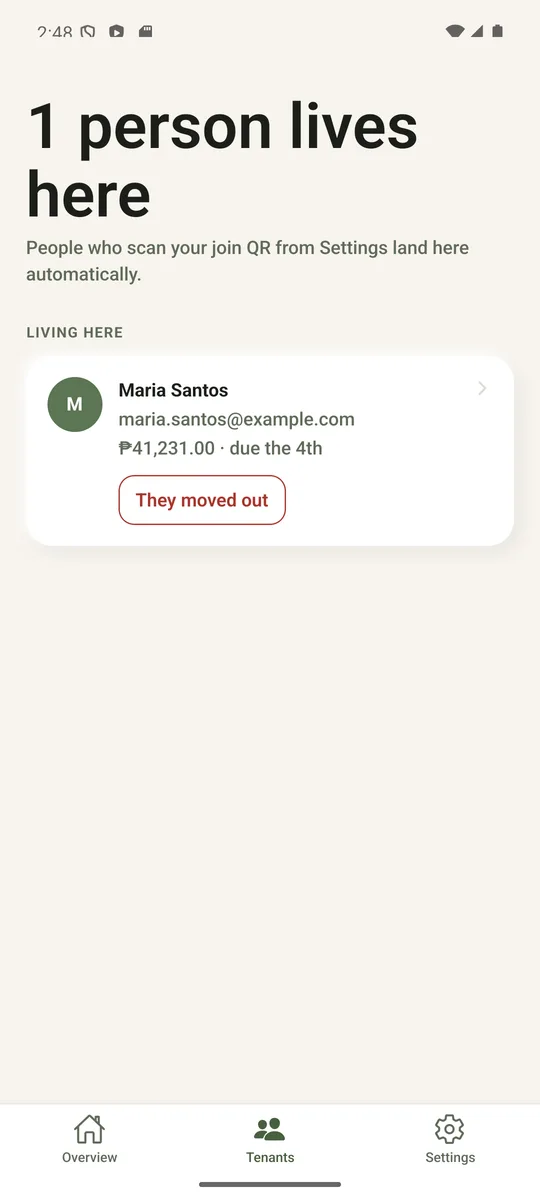
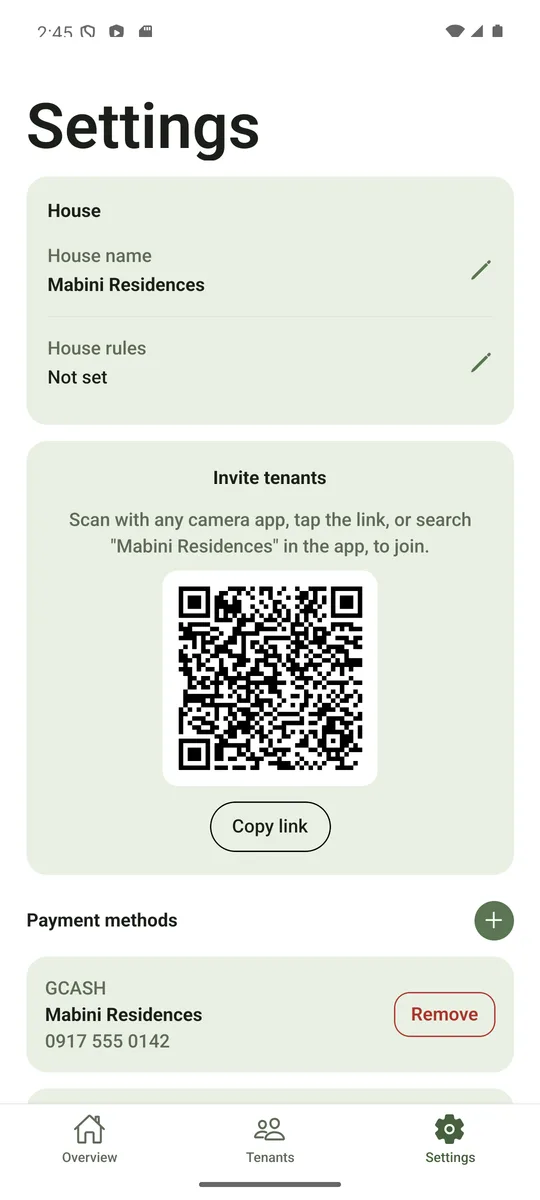
The landlord signs in with Google, creates the house, and adds a GCash number with a QR code, or bank details, in Settings. Tenants join by scanning a QR code or opening a link. From then on each tenant has a record with their room, contact details, move-in date, monthly rent and due day. The record can also hold a rent calendar (the security deposit, the date rent starts, months paid in advance, and prorated rent for the days between move-in and the start date), private notes that no tenant-facing screen can read, and documents such as a valid ID or the lease, which only the landlord can see.
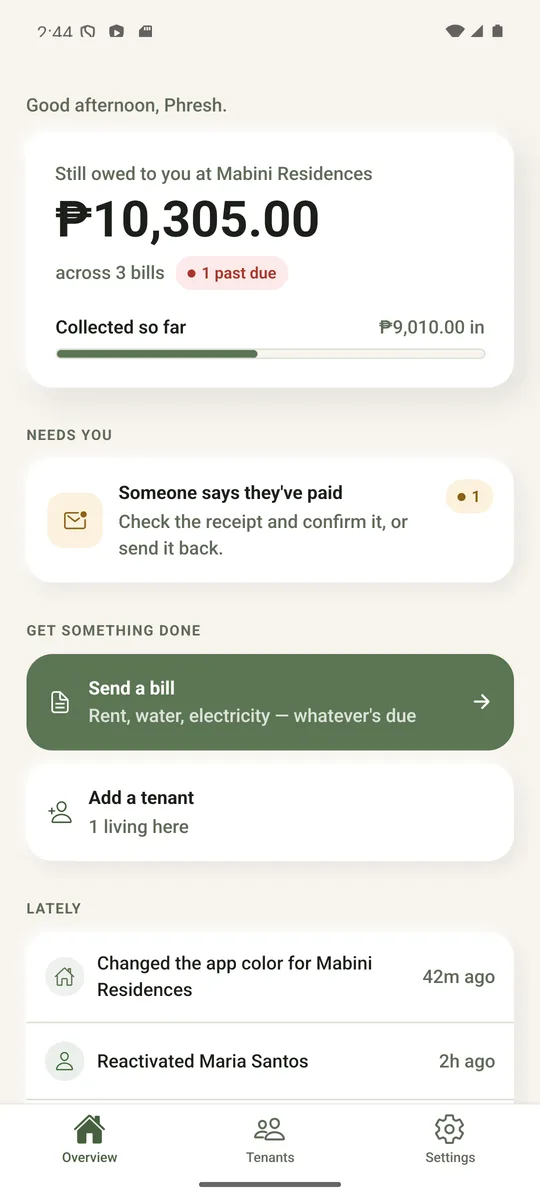
The owner opens the app to one number: what is still owed across all bills, how many are past due, and how much has been collected so far. Below it sits a short "Needs you" queue of payments that tenants say they have made, shortcuts to send a bill or add a tenant, and a feed of recent changes. Settings holds the house name, house rules that every tenant can read, the invite QR code, the payment methods and an accent colour for the house.
The tenant's side, and how a payment works
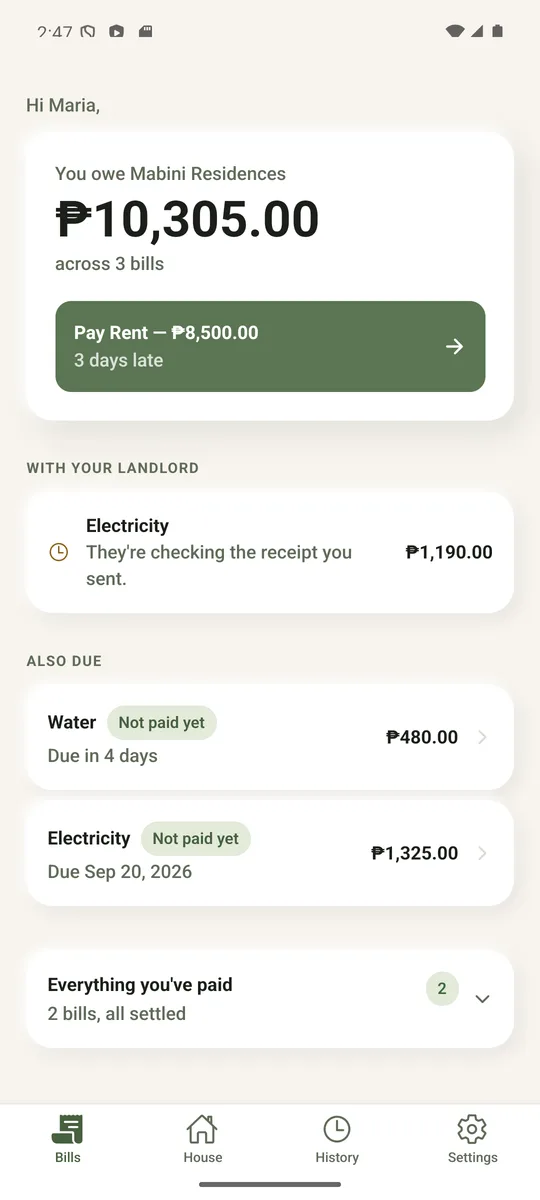
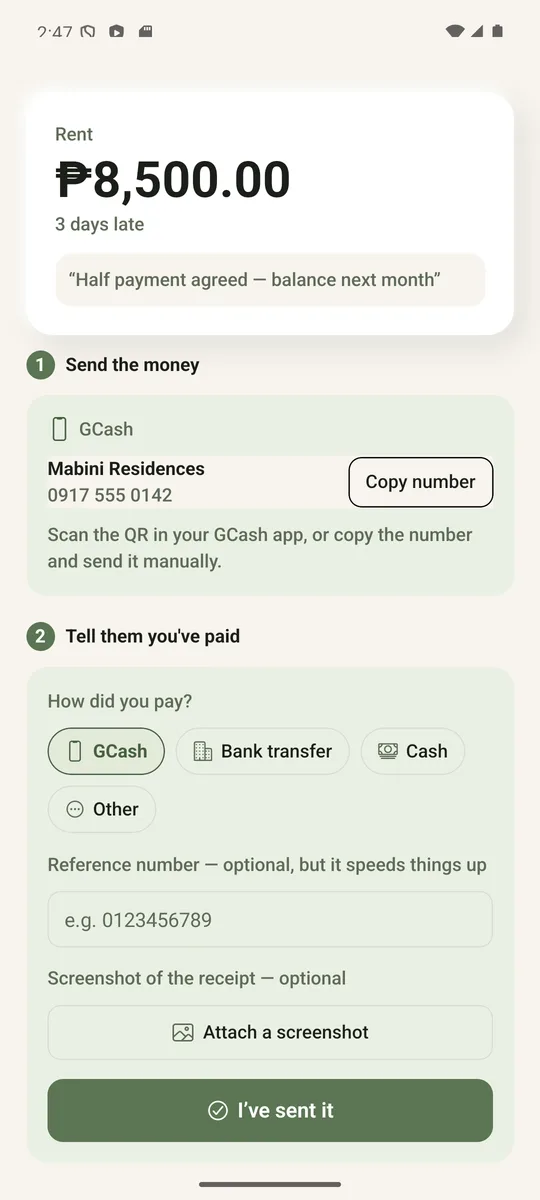
Tenants get their own view. It leads with what they owe and the one thing to do next, such as paying rent that is three days late, then groups the rest into bills the landlord is checking, bills not paid yet, and everything already settled. The tenant screen and the owner screen above show the same ₱10,305.00 across the same three bills, from opposite sides.
Personal GCash accounts have no public API, and automated collection needs a registered business, so version one is a ledger plus proof of payment. The landlord sends a bill for rent, water, electricity or anything else, with an amount, a period, a due date and an optional note that both sides can read. The tenant opens it, sees the amount with the QR code and a copy-number button, and pays in their own GCash or bank app. Back in Katiwala they choose how they paid, optionally add a reference number and a screenshot of the receipt, and press "I've sent it". The payment appears under "Needs you", and the landlord checks the receipt and either confirms it or sends it back. This is the digital version of the signature and date columns in the old spreadsheet: the app records who confirmed the payment and when. Every bill is in exactly one state: unpaid, pending verification, paid, overdue, or void for a bill sent by mistake.
How it is built
Katiwala is one Next.js app on Cloudflare Workers, deployed through OpenNext. It serves the web dashboard and the JSON API that the mobile app talks to. The mobile app is written with Expo, React Native and TypeScript, with separate owner and tenant screens. Data lives in Cloudflare D1 (SQLite) through Drizzle ORM, with 14 migrations so far and money stored as integer cents, and R2 buckets hold GCash QR codes, payment receipts and tenant documents.
Sign-in is Google OAuth written with Arctic and a session table. The web app gets a cookie; the mobile app gets a bearer token handed over once through a deep link. Every table is scoped to an organization, so a single house today can become many landlords later without a schema rewrite. Risky changes go through a separate staging stack with its own Worker, database and buckets before they reach the live tenants, and the lease, tenant, invite, admin and API-auth code is covered by unit tests, with a rate limiter on the API.
What is not built yet
The mobile app has moved ahead of the web dashboard, so house rules, tenant reactivation and per-tenant bill history are not in the web UI yet. The Play Store listing is prepared but the app is not published, due-date reminders by push notification are not wired up, and a real payment gateway would need a registered business.