
Neo PHP
NeoPHP is a small freelance studio that builds websites, apps and interactive experiences for clients. This is the studio's own site: what it offers, who is on the team, and a form to start a project.
NeoPHP is a small freelance studio of three people: one leads discovery, scope and pricing with clients, one handles content, branding and promotion, and I build the web, app and game work with deployment and testing in mind. The studio offers web design, web development, app development, game development and DevOps support, and this site is its home on the web.
The studio
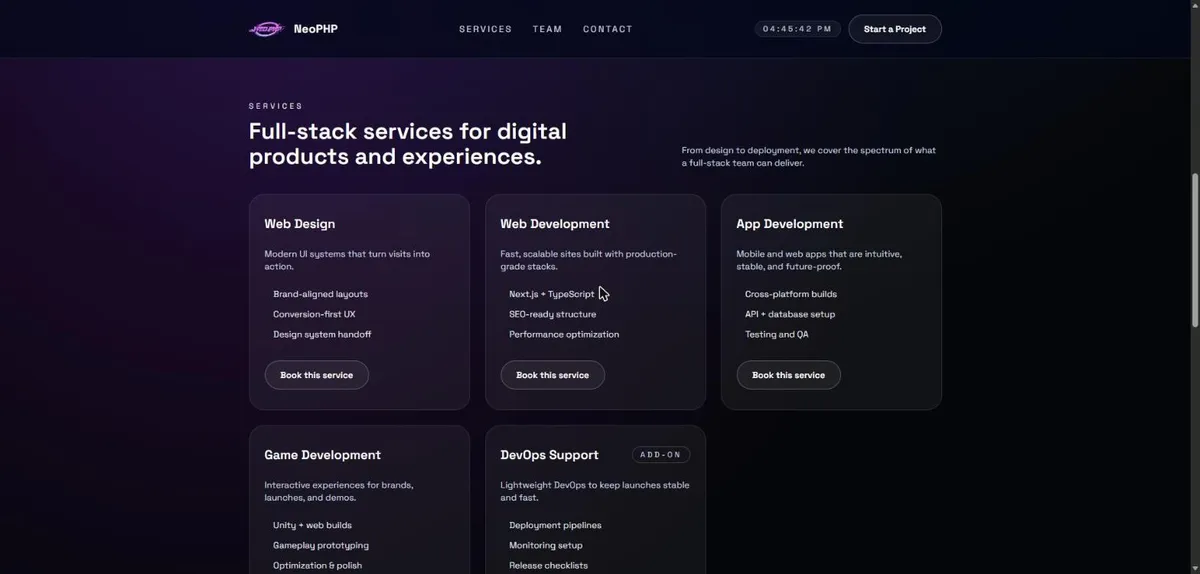
NeoPHP is three people with separate jobs. One leads discovery with clients, defines scope and pricing, and manages agreements and payments. One handles content, branding, promotion and lead generation, with some UI and UX support. I build the web, app and game work, with deployment and testing in mind. The site offers five services: web design, web development, app development, game development, and DevOps support as an add-on for deployment pipelines, monitoring and release checklists.
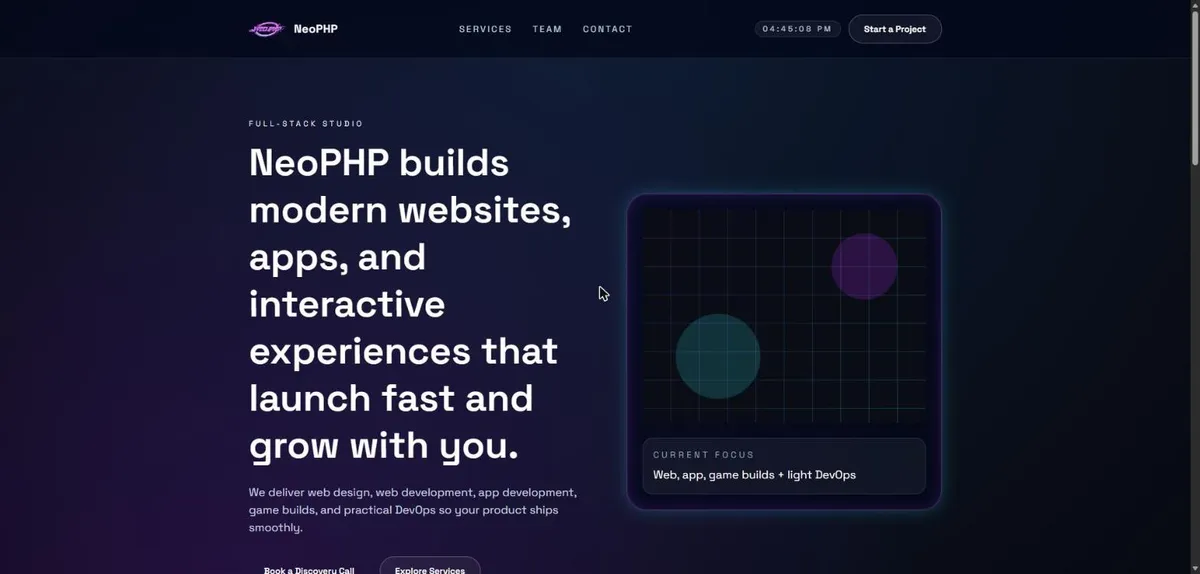
The site is a single scrolling page with three destinations in its header: Services, Team and Contact. The hero says what the studio does in one sentence, a "current focus" card repeats it in short form, and the header shows a live clock and a Start a Project button.
The contact form
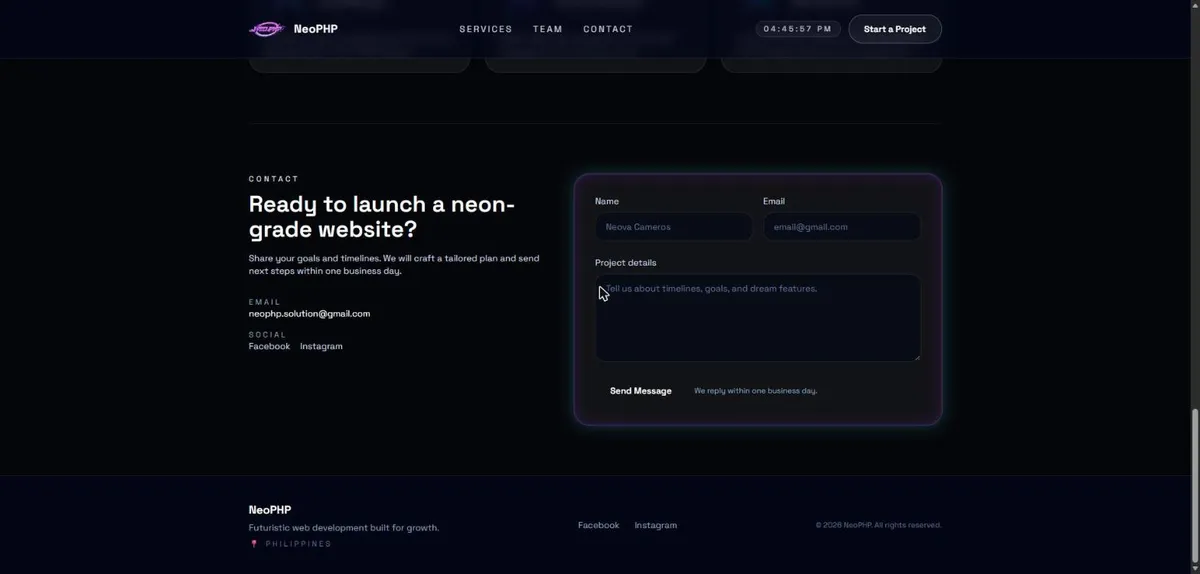
Starting a project means filling in a name, an email and the project details. The form posts to a Next.js API route that runs on the Node runtime, validates the three fields, and sends the message to the studio's inbox through Nodemailer over Gmail's SMTP server, using credentials kept in environment variables. A hidden field acts as a honeypot: bots tend to fill every field, and a submission that fills it gets an "OK" response without anything being sent.
How it is built
The site is a Next.js 16 app with the App Router, React 19, TypeScript and Tailwind CSS 4, deployed on Vercel. The page is assembled from a handful of small components: a header, a button, service and team cards, the contact form and a footer. Search and social previews are handled in the code: page metadata, Open Graph and Twitter card tags, JSON-LD structured data describing the organisation and its services, a robots file, a sitemap and a Google site-verification file.
Known gaps
The page still defines three sample project cards that are not shown on the live site, and the structured data still lists them as creative work. The README is the default one from create-next-app, and the contact form depends on a mailbox password rather than a transactional email service.